

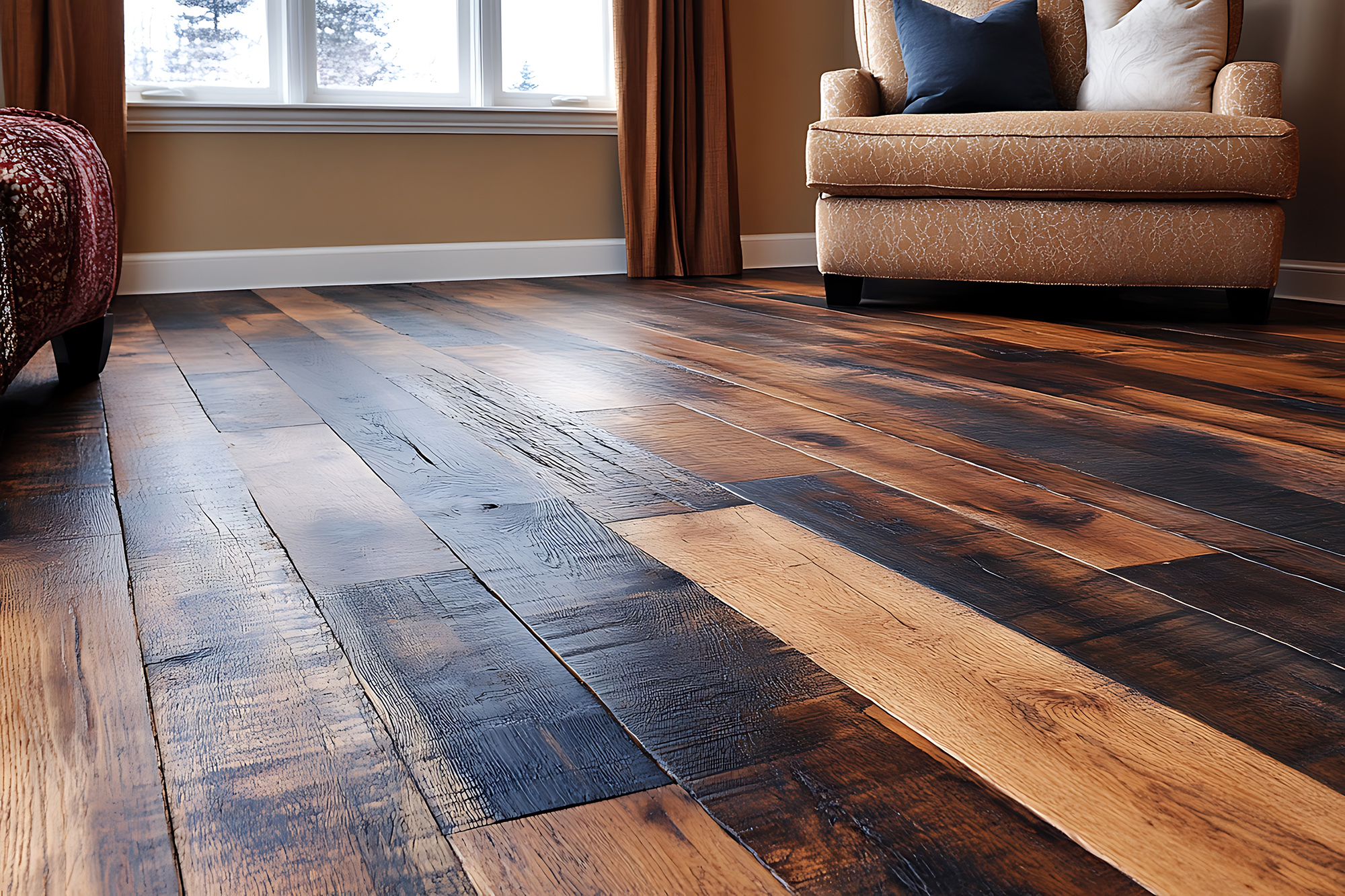
If you own hardwood in northern Illinois, you've probably watched your floor change a little between January and July. That movement isn't a defect. It's wood doing exactly what wood does.
The trick is knowing the difference between normal seasonal shift and a real problem that needs attention.
This guide walks you through the three terms you'll hear most: cupping, crowning, and gapping. We'll keep it practical so you can look at your own floor and know what you're seeing.
What Cupping Looks Like and Why It Happens
Cupping shows up when the edges of a board sit higher than its center, creating a subtle wavy or "washboard" feel underfoot. Run your hand across the planks and you'll feel the dip in the middle. It almost always points to a moisture imbalance, where the bottom of the board has absorbed more moisture than the top.
In our climate, cupping tends to appear in humid summer months or after a basement or subfloor moisture event. The fix starts with finding the moisture source, not sanding. Sand a cupped floor too early and you risk crowning later, once the board dries and flattens back out.
Crowning and Gapping Through the Seasons
Crowning is the reverse of cupping: the center of the board rises above the edges. You'll often see it when a previously cupped floor was sanded flat before it fully dried, or when the top of the board takes on more moisture than the bottom. The board essentially over-corrects.
Gapping is the winter classic in McHenry County homes. When furnaces run and indoor air drops toward 20% relative humidity, boards lose moisture and shrink, opening thin lines between planks. Most seasonal gaps close again in spring. The species, board width, and how the floor was milled all influence how much you'll see, which is exactly why the quality of the wood underneath matters so much. Our piece on how to spot a quality hardwood floor breaks down why grain and core construction drive long-term stability.
When to Watch and When to Call
Some movement is just part of living with a natural material. Hairline winter gaps that vanish by May, or a faint seasonal cup that relaxes on its own, usually need monitoring rather than repair. Track your indoor humidity and note whether the symptom follows the seasons.
Call a professional when gaps stay open year-round, when cupping worsens or feels spongy, or when you spot staining, which can signal a subfloor or plumbing issue. A flooring expert will use a moisture meter to locate the imbalance before recommending any sanding or board replacement.
Reading your floor is mostly about patience and observation. Identify the symptom, watch how it tracks with the seasons, and bring in help before small movement becomes permanent damage.
At Ridgefield Industries, we've manufactured, installed, and repaired hardwood across Chicagoland since 1995, with our own dry kiln and flooring mill right here in Crystal Lake, IL. If your floor is showing signs you can't quite read, our team can diagnose it properly and recommend the right next step, not the most expensive one.
We proudly serve Crystal Lake, IL, and you're always welcome to visit Crystal Lake, IL to see species, widths, and finishes in person. Contact us today to schedule an assessment or request a quote.


