

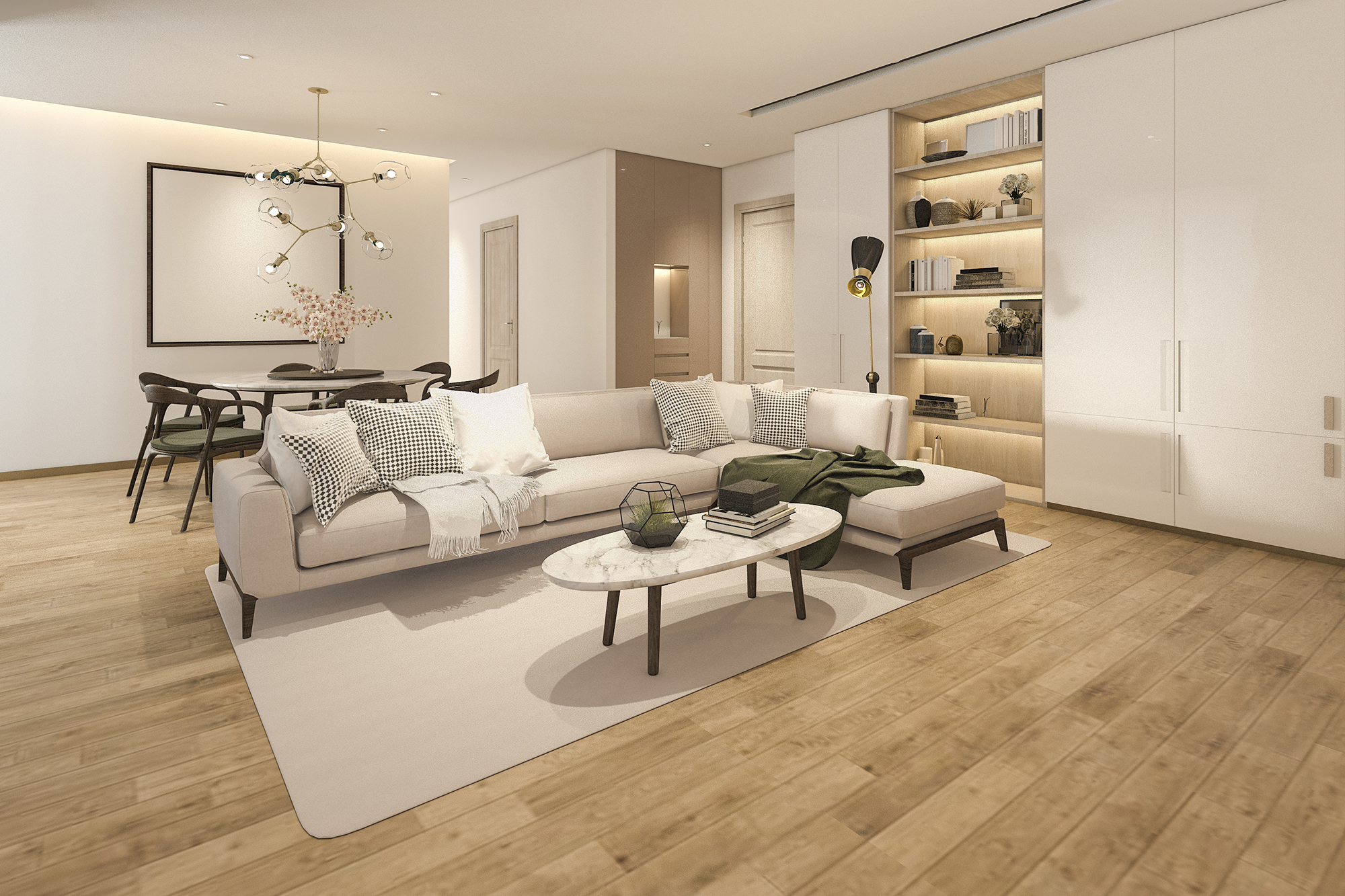
When homeowners ask for a low-maintenance hardwood floor, they often start by asking which species is strongest, densest, or hardest. That makes sense on the surface. Harder woods sound like they should be easier to live with. In practice, though, most day-to-day maintenance complaints are not really about dent resistance. They are about how visible wear looks on the surface.
That is why finish choice matters so much. The finish determines how light reflects, how scratches telegraph, how dirt reads against the floor, and how forgiving the surface feels after six months of real life.
What people usually mean by low maintenance
In most homes, low maintenance means a floor that does four things well:
It does not highlight dust constantly
It does not show every sock print or paw print
It does not make light scratches look dramatic
It still looks intentional between deep cleanings
Those are finish issues first.
A high-gloss floor can make a durable species feel exhausting because every swirl, smudge, and micro-scratch becomes visible. A matte or low-sheen finish on the same species can make the floor look calmer and easier to keep.
Why species matters less than people think
Species still matters. It affects hardness, grain structure, color movement, and stain behavior. But species alone does not decide whether a floor feels easy to own.
Take oak. It remains one of the most practical hardwood choices because it balances durability with repairability and design flexibility. But even within oak, the maintenance experience can swing dramatically depending on whether the floor is smooth, wire-brushed, matte, satin, site-finished, or prefinished with micro-bevels.
The same is true for harder species. A very hard wood with a dark, glossy, smooth finish can still be a maintenance headache. Hardness may reduce some denting, but it does not stop surface visibility problems.
The finish factors that really drive upkeep
Sheen level
This is one of the biggest maintenance variables.
Lower-sheen finishes scatter light rather than reflecting it sharply. That means dust, scratches, and print marks are less obvious. Matte and satin finishes are usually the safest recommendations for busy homes.
Higher-sheen finishes reflect more light and create more contrast at the surface. That makes them look crisp when freshly cleaned, but less forgiving the rest of the time.
Surface texture
Texture can hide light wear surprisingly well.
Wire-brushed, lightly scraped, or grain-enhanced surfaces tend to disguise everyday traffic better than perfectly smooth floors. That does not mean heavily distressed is always the answer. It means a little texture can reduce visual noise from use.
Color and contrast
Very dark floors and very pale uniform floors can both be demanding in different ways. Dark floors often show dust and pet hair. Ultra-clean pale finishes can show grime lines in high-traffic areas if the finish is too flat and the grain too quiet.
Mid-tone colors usually offer the broadest forgiveness because they reduce contrast between the floor and everyday debris.
Repair profile
Some finishes are easier to refresh than others. A floor that can be screened, recoated, or locally repaired with less visual mismatch may be more practical long term than one that looks pristine only when untouched.
How to choose a lower-maintenance floor in real life
A smart low-maintenance hardwood specification usually includes:
A matte or satin sheen
Moderate color movement
Some natural grain character
A texture that softens visible wear
A finish system appropriate for the room’s traffic level
This is also where custom planning matters. Board width, cut, stain, and finish all interact. A floor should not just look beautiful on day one. It should still look composed after muddy shoes, dry winter air, chairs shifting, and a few rushed cleanups.
The mistake that causes regret
The most common mistake is choosing based on a sample board under showroom lighting and ignoring how finish behaves in the actual home. South-facing light, pets, kids, cooking traffic, and entryway grit all change the equation.
A floor can be technically durable but visually high maintenance. That is the distinction many buyers only understand after installation.
If you want hardwood that feels easy to live with, start by asking how the finish will behave, not just how hard the wood is. That usually leads to better long-term results, fewer surprises, and a floor that still looks right on an ordinary Tuesday.
Visit Ridgefield Industries at Crystal Lake, IL to compare finish systems, sheen levels, textures, and species in person. We proudly serve Crystal Lake, IL. If you are narrowing down options for a remodel, new build, or custom hardwood project, contact us to speak with our team and get hardwood solutions that fits the way your home actually functions. Ridgefield Industries is based in Crystal Lake, Illinois, with a local showroom at 8420 Railroad St, Crystal Lake, IL 60012.


