

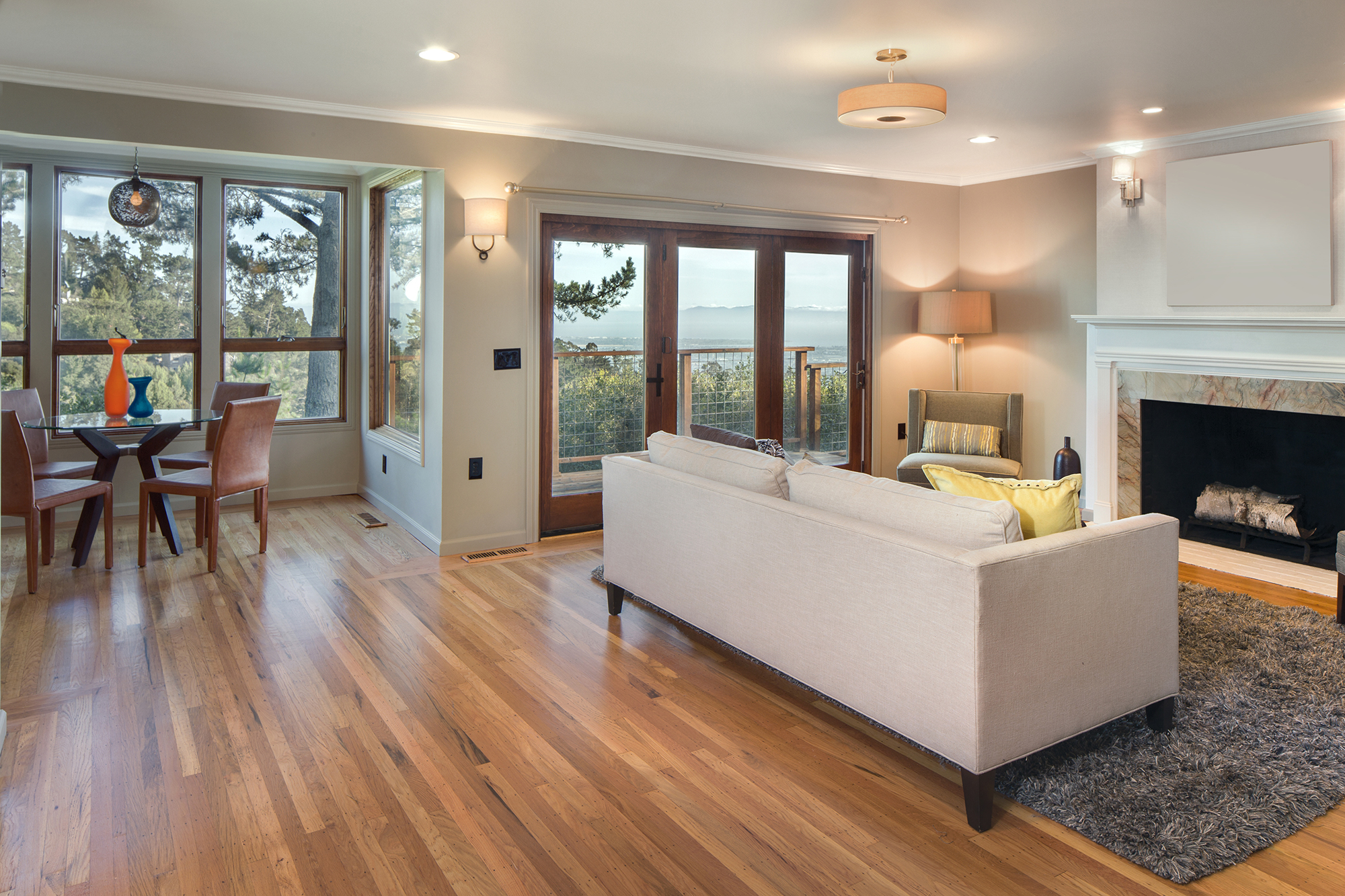
Hardwood flooring is not a flat color. It is a natural material with grain, pores, undertones, variation, finish, and reflectivity. That is why the same sample can look soft and neutral in a showroom, yellow beside kitchen cabinets, gray in a hallway, and warmer again at night under lamps. This is not a defect. It is how wood interacts with light.
For homeowners choosing custom hardwood floors, undertone is one of the most important decisions. The wrong undertone can make paint colors look off, cabinets feel dated, or furniture appear disconnected. The right undertone helps the whole home feel more balanced, even when rooms have different lighting conditions.
Wood species creates the base undertone
Every hardwood species starts with its own natural color family. White oak often feels more neutral or slightly warm, with a calmer grain pattern. Red oak usually carries more pink or reddish warmth. Walnut is deeper and browner, often with rich variation. Maple can look cleaner and lighter, but it may also show a different stain response than oak.
This base undertone matters because stain does not erase the wood underneath. It modifies it. A beige stain on red oak can still reveal pink warmth. A warm brown on white oak may look soft and natural. The same finish on two different species can produce completely different results. That is why species selection should happen before final stain selection.
Natural light changes color throughout the day
Rooms with large windows can make hardwood floors look different from morning to evening. North-facing light is often cooler and can make warm floors look more muted. South-facing light can intensify warmth. East-facing rooms may feel bright in the morning and softer later. West-facing rooms can become very warm in late-day light.
This matters when choosing stains and finishes. A floor that looks perfect in a bright showroom may feel too yellow in a sunny kitchen or too dull in a shaded office. Samples should be viewed in the actual home whenever possible, especially in rooms where the floor will connect to cabinets, trim, wall color, or stone surfaces.
Artificial lighting can shift the entire floor
LED temperature has a major effect on hardwood appearance. Warm bulbs can bring out amber, honey, red, and brown tones. Cooler bulbs can make floors look flatter, grayer, or slightly washed out. Mixed lighting can be even trickier, especially in open-concept homes where recessed lights, pendants, lamps, and daylight all hit the floor differently.
Before approving a final stain, homeowners should view samples under the lighting they actually use. If the home has warm 2700K bulbs, the floor should be evaluated under that condition. If the home uses cooler task lighting in the kitchen, that should be tested too. Lighting is not separate from flooring. It is part of the final color.
Sheen affects how the color reads
A glossy finish reflects more light, which can make a floor look brighter but also more visually active. It may show reflections, dust, scratches, and uneven lighting more clearly. Satin and matte finishes tend to soften the floor’s appearance and reduce glare, which can make undertones easier to live with in busy homes.
However, matte does not mean invisible. A matte finish can still look warm, cool, rustic, modern, or formal depending on species and stain. The best sheen is the one that supports the room’s style and maintenance needs. For many modern hardwood projects, satin or matte offers the right balance between practical performance and a natural look.
Test undertones beside permanent materials
Paint can change. Furniture can change. Permanent materials are harder to change. Hardwood samples should be tested beside cabinets, stair parts, doors, trim, fireplace stone, countertops, and built-ins. These surfaces reveal whether the floor undertone is fighting the home or supporting it.
At Ridgefield Industries, custom hardwood selection can include a closer look at these relationships before the floor is installed. A sample that looks good alone is not enough. The better question is whether it looks good in the room, with the existing materials, in the actual light, at different times of day.
Hardwood floors look different under every light because wood is a natural, layered material. Species, stain, sheen, grain, daylight, artificial lighting, and surrounding finishes all affect the final appearance. Homeowners who test undertones carefully are more likely to choose a floor that feels right after installation, not just in the sample stage.
For custom hardwood floor design, manufacturing, and installation in Crystal Lake, Ridgefield Industries helps homeowners choose floors with the right undertone, finish, and technical plan. Visit Crystal Lake, IL to compare hardwood options and discuss your home’s lighting conditions. Serving Crystal Lake, IL, the team is ready to help you make a confident flooring decision, so contact us to begin.


